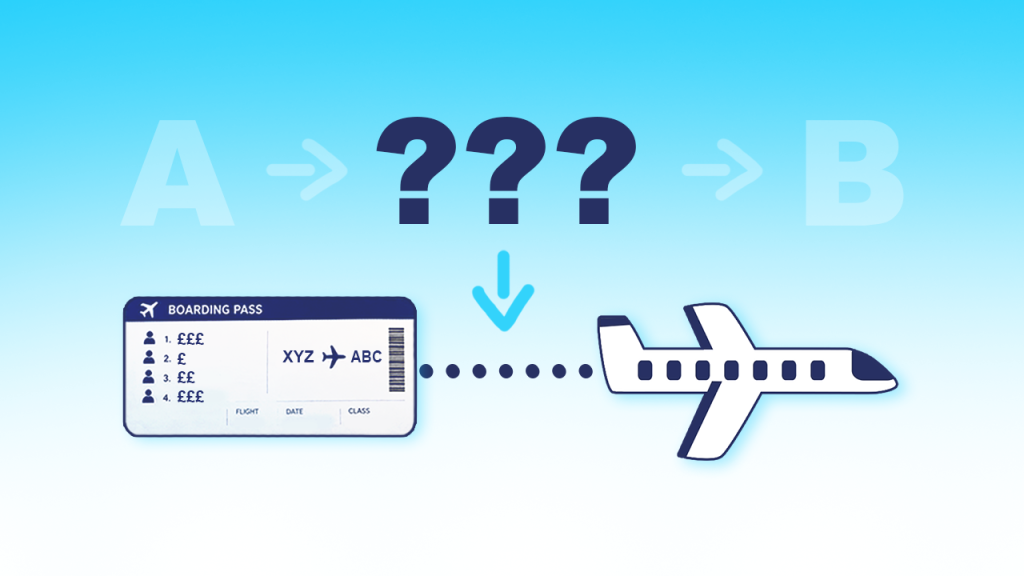






Air-travel is international. So what defines the nationality of an airline as UK/EU, and why does the distinction matter anyway?
An airline’s nationality is linked to where it qualifies for licensing, which comes down to a number of factors, such as:
- Aviation laws
- Governing bodies
- The location of its principal place of business
- The nationalities of those in charge of the airline
Understanding how the nationality of an airline is defined can be crucial when it comes to claiming compensation for flight disruption (especially for post-Brexit UK & EU travel), as it can have a direct impact on when you’re covered by UK261 or EU261.

Overwhelmed? Don’t worry, we explain everything below!
 Have you got an unresolved flight complaint?
If you’ve hit a wall with an airline or airport, AviationADR offers a FREE, independent route to a resolution – approved by the Civil Aviation Authority to settle disputes between passengers and Participating Member airlines and airports across the UK and EU.
 What defines a UK airline?
In general, a UK airline (that flies commercially) is one that has attained an Operating Licence and Air Operator Certificate from the Civil Aviation Authority (CAA) – who is the main governing body for aviation in the UK.
 To qualify for CAA licensing a commercial airline has to fulfil the following conditions, at minimum:
- Their principal place of business must be in the UK (or an associated territory)
- The airline must be majority owned & effectively controlled by qualifying nationals (normally UK nationals)
- The airline must be financially fit, & sufficiently insured
- The owners of the airline must be of good repute & character
- The airline must have access to aircraft suitable for its operations
 As such, after having taken a look at the CAA’s above requirements for licensing, we can now summarise the what defines a commercial UK airline:
- An airline with a UK (or associated territory) PPoB
- An airline that’s majority owned & effectively controlled by qualifying nationals
- An airline with CAA authorisation & licensing
REMEMBER: These are just summaries. There may be more requirements (or exceptions) for UK airline classification not covered by our article. For a comprehensive overview of the current regulations, you should see the Civil Aviation Authority’s official website.
 What defines an EU airline?
Across the EU, Regulation (EC) No 1008/2008 acts as a foundational framework for governing commercial aviation matters – including what qualifies an airline for EU licensing (and therefore: what defines a commercial airline as an EU airline).
Since the EU is a collection of many different member states, there is no centralised EU-wide equivalent for the UK’s Civil Aviation Authority that hands out Operating Licences or Air Operator Certificates. Instead, each country has its own regulatory authority for this purpose (e.g. the Luftfahrt Bundesamt in Germany, or the Direction Générale de l’Aviation Civile in France).
Regulation (EC) No 1008/2008 states that an EU airline must fulfil the following conditions, at minimum, to qualify for licensing:
- Their principal place of business must be in the relevant member state
- They must have 1 or more aircraft (either through ownership or a dry lease agreement)
- Their main occupation must be to operate commercial air services
- The airline must be majority owned by EU member states and/nationals of EU member states
- The airline must be effectively controlled by EU member states and/nationals of EU member states
- The airline must be financially fit to meet its obligations & operational costs
- Those who continuously & effectively manage the operations of the airline must be of good repute
Compare the EU airline checklist to the UK airline one. They’re similar, right?
That’s because the UK used to share the same rules as the EU, up until Brexit. That’s also why the air-travel regulations UK261 and EU261 are so similar, too… The UK used to use EU261!
We can now summarise what defines a commercial EU airline:
- An airline with an EU-based PPoB
- An airline that’s majority owned & effectively controlled by EU nationals/states
- An airline with full licensing from the relevant EU member state’s regulatory authority
REMEMBER: These are just summaries. There may be more requirements (or exceptions) for EU airline classification not covered by our article. For a comprehensive overview of the current regulations, you should see Regulation (EC) No 1008/2008.
What is the difference between a UK and an EU airline?
So, now that we’ve got past the difficult legal jargon, we’ve established that the main difference between a UK and an EU airline is the regulatory jurisdiction within which they operate, post-Brexit.
What primarily defines an airline’s nationality is the country/jurisdiction in which it qualifies for and holds the licences required to operate.
 Does flying to the UK or EU make an airline a UK or EU airline?
When it comes to an airline’s nationality it doesn’t matter where they fly to/from, or what they call themselves.
For example:
- A new airline called ‘UK Airlines’ is founded in Germany
- UK Airlines wants to fly to/from the UK and Germany
- They obtain their Operating Licence and Air Operator Certificate from the German Luftfahrt Bundesamt
In this situation, UK Airlines – despite the name – would legally be classified as an EU airline… Because it qualified for, and obtained its licences in, Germany: an EU member state.
Why does it matter whether it’s a UK or EU airline?
If you don’t experience any flight disruption… It probably won’t make much difference to you whether your airline is a UK or an EU airline.
However, if you’re flying through UK or EU airports, and you experience:
- A flight delay
- A flight cancellation
- Denied boarding
- A missed connection
- Any other form of flight disruption
… Then the nationality of the airline operating your flight can make a difference to your eligibility when it comes to claiming flight compensation under UK261 and EU261.
Want to find out more? Please see our dedicated articles below:
> UK261 or EU261: which rules cover your flight after Brexit?
> What is a codeshare flight? UK261 and EU261 rights explained
 I have a flight complaint! How do I get started with AviationADR?
You can escalate your flight complaint with us for FREE in whichever way suits you – through our online portal, our app, by post, or by phone:
> Start your complaint with AviationADR
> What to do before you come to us
Want to learn more about your Flight Rights? Follow our social media platforms below!